
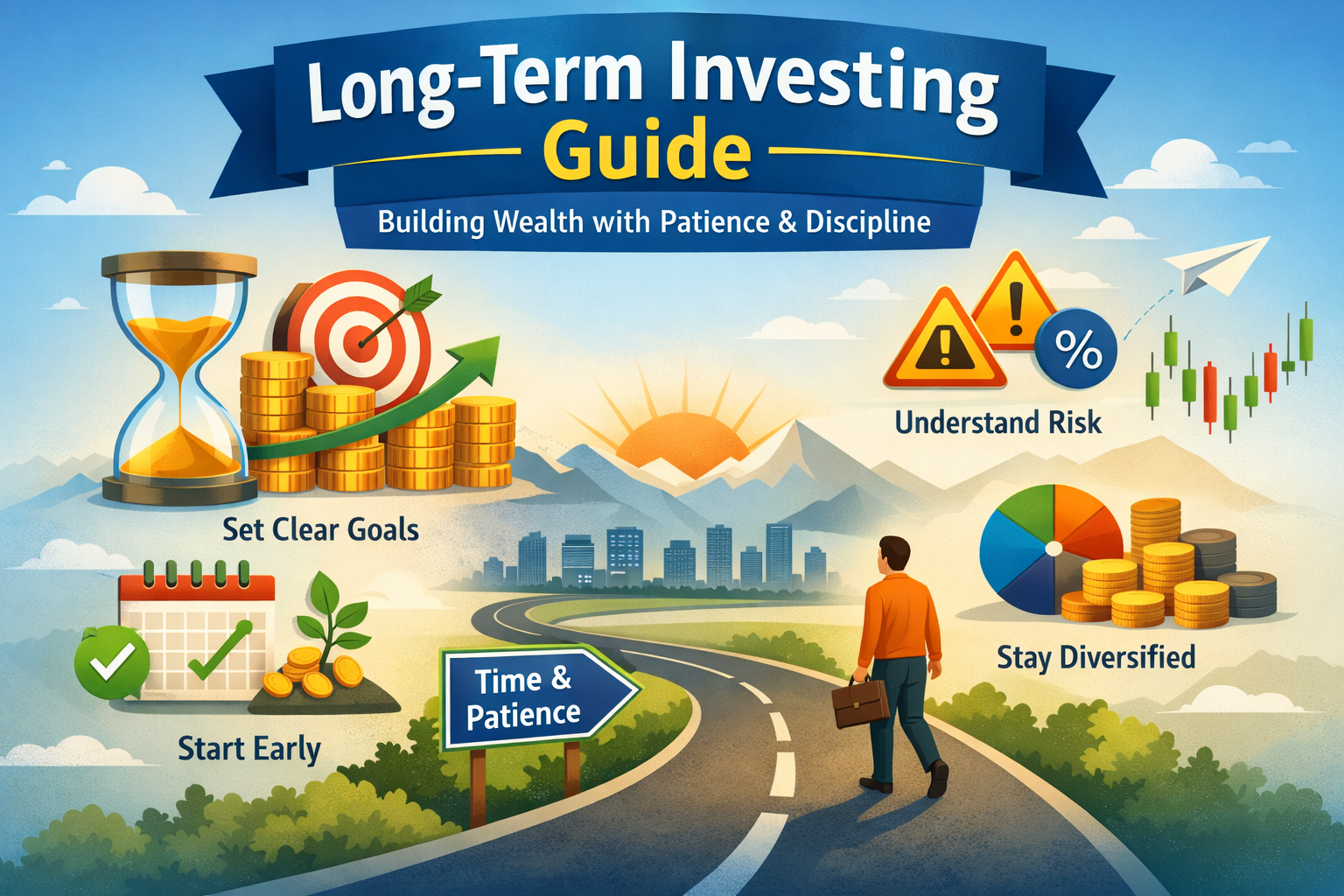

Many people wait too long before they start investing. Some feel they do not earn enough yet. Others feel investing is risky or confusing. Because of this, investing often gets delayed until “later”.
But long-term investing does not reward perfect timing. Instead, it rewards people who start early and stay consistent.
Before choosing where to invest, it helps to understand how to think about investing in the first place.
Investing Is a Long-Term Process, Not a Shortcut
Many people expect investing to deliver quick results. News headlines and social media often make it look easy. As a result, expectations rise too fast.
In reality, investing works slowly. Money grows over years, not months. The real benefit comes from staying invested and letting time do the work.
When expectations stay realistic, people make calmer decisions.
Start With the Purpose of the Money
Every investment should have a clear purpose. Without a goal, investing becomes random and emotional.
For example, money meant for a house in three years should not be invested the same way as money meant for retirement after twenty-five years. Time changes everything, including how much risk makes sense.
Clear goals help people stay calm when markets move up and down. They also prevent short-term money from entering long-term investments.
Saving and Investing Are Not the Same
Many people mix up saving and investing. However, both play different roles.
Saving protects money needed in the near term. It focuses on safety and access. Investing focuses on growth over long periods and helps money beat inflation.
Before investing seriously, people should protect short-term needs through savings. Without this base, investments often get disturbed at the wrong time.
Build Protection Before You Invest Aggressively
Before thinking about wealth, people should focus on financial protection. One important step is having term insurance in place.
Term insurance ensures that family members stay financially secure if income stops suddenly. Without this protection, investments may need to be withdrawn during difficult times.
A strong base allows investments to remain untouched and grow properly.
Time in the Market Matters More Than Timing the Market
Many people wait for the “right time” to invest. They expect markets to fall or conditions to improve. Meanwhile, years pass without action.
Long-term investing benefits from time, not predictions. Starting early gives compounding space to work. Even small amounts invested regularly can grow well over time.
You can learn more about how compounding works from this simple explanation by the U.S. government:
https://www.investor.gov/introduction-investing/investing-basics/compound-interest
Understand Risk Before You Try to Avoid It
Risk scares many people. At the same time, some people take too much risk without understanding it.
Risk does not mean loss every time. It means returns may fluctuate in the short term. Over longer periods, well-chosen investments often smooth out this movement.
When people understand their risk tolerance, they stay invested during difficult phases. Without this clarity, decisions often turn emotional.
Diversification Makes Investing Easier to Stick With
Putting all money into one idea may feel confident at first. However, this approach increases stress when things go wrong.
Diversification spreads money across different assets. This reduces the impact of any single setback. More importantly, it makes investing emotionally easier.
When stress reduces, discipline improves.
Discipline Matters More Than Intelligence
Many intelligent people struggle with investing. Emotions often get in the way.
Fear pushes people to sell during market falls. Greed pushes them to buy during highs. Both actions hurt long-term results.
A simple and disciplined plan often performs better than complex strategies. Clarity supports discipline, and discipline supports results.
Long-Term Investing Requires Patience
Long-term investing rarely feels rewarding in the short run. Some years deliver low or flat returns. Others test patience.
These phases are normal. Markets do not move in straight lines.
Patience allows investments to recover and grow. Without patience, even good plans fail.
Review Your Investments, Don’t React to Them
Reviewing investments helps people stay aligned with goals. Reacting to daily news creates confusion.
A calm review once or twice a year works well for most people. This approach keeps decisions intentional instead of emotional.
Long-term investing works best with fewer actions and clearer thinking.
What Long-Term Investing Is Really About
Long-term investing is not about beating others. It is about building financial stability slowly.
People who respect time, control emotions, and stay consistent usually benefit the most. Over years, these habits matter more than short-term performance.
For most people, thinking clearly about investing matters more than investing aggressively.
Closing Note
Long-term investing does not demand perfection. It demands patience, clarity, and consistency.
If you would like to discuss these ideas in the context of your own situation, you are welcome to schedule a conversation at your convenience.
Pingback: Why Equity Investors Often Ignore Gold in Portfolio - Warade FinBlogs
Pingback: 7 Signs of Mutual Fund overlap in a Busy Portfolio